
Structural Glazing BIM Services Intelligent 3D Models for Frameless & Point-Supported Glazing Systems
We provide Structural Glazing BIM services that help architects, facade consultants, and contractors deliver frameless, point-supported, and structurally bonded glazing systems with precision and confidence. Using Autodesk Revit and advanced digital workflows, we develop data-driven models for structural glazing systems that integrate seamlessly with architectural, structural, and MEP systems.
Our models are built for coordination, fabrication, and installation, supporting design validation, quantity estimation, shop drawing production, and on-site assembly sequencing.
What We Deliver
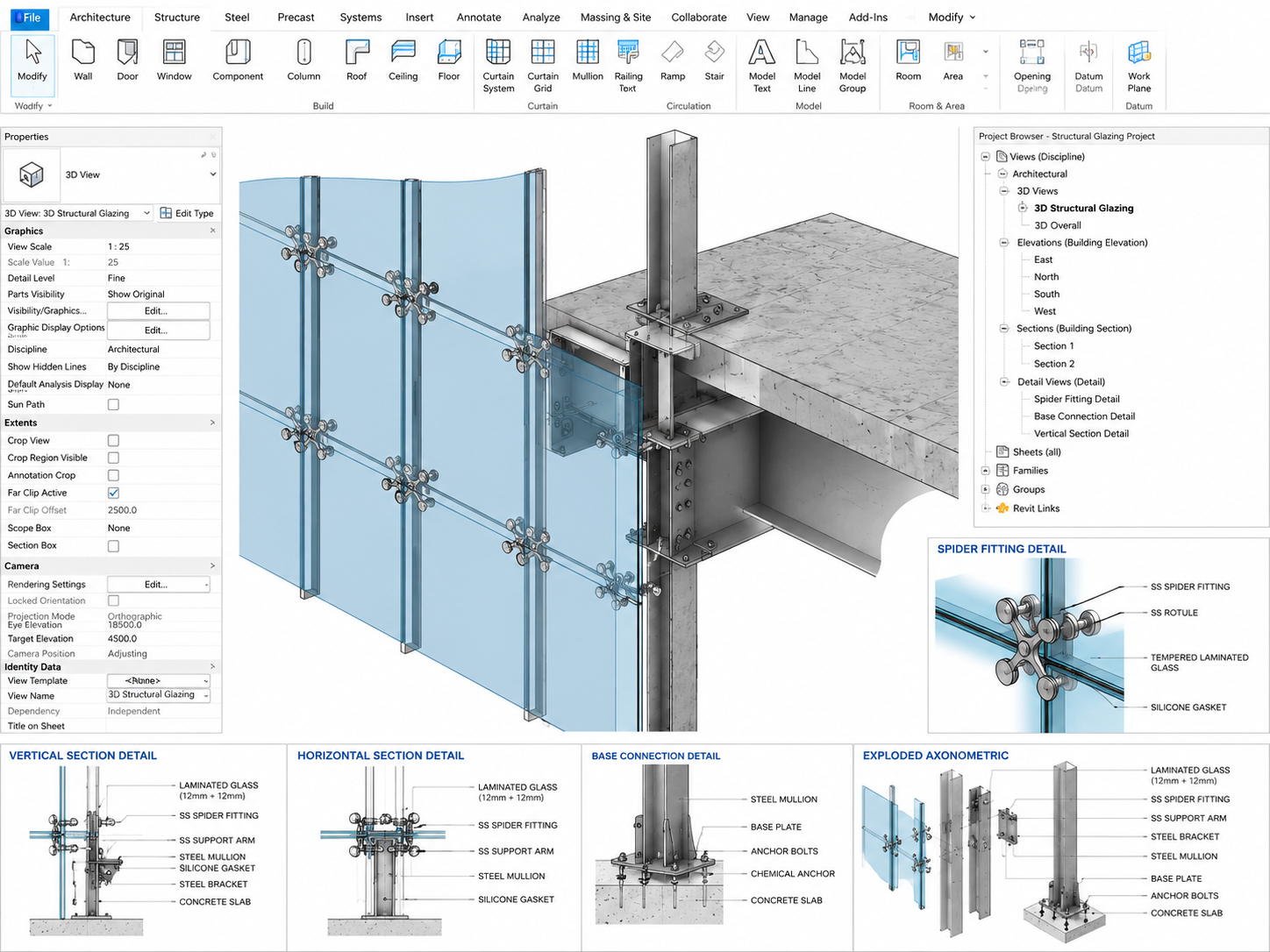
Structural Glazing BIM Modeling involves the creation of detailed, parametric 3D models for structural glazing systems using Autodesk Revit.
Structural glazing systems—including point-supported, bolted, and structurally bonded glass assemblies—require precise modeling of glass panels, stainless steel fittings, support brackets, and structural connections within a single, information-rich digital environment.
We deliver:
- ✅ Parametric 3D structural glazing models in Revit
- ✅ Point-supported glazing systems (bolted and tensioned)
- ✅ Structurally bonded glazing systems (silicone bonded)
- ✅ Glass fin and structural glass systems
- ✅ Cable-net and tensioned glazing systems
- ✅ Stainless steel fitting and connection details
- ✅ Shop drawings and fabrication details extracted from the model
- ✅ Clash detection and coordination reports
- ✅ Quantity takeoffs and material schedules
Pilkington UK has made its structural glazing technology Pilkington Planar available via BIM, helping to simplify the design and build of expansive glazed building features. The models help Revit users to design glazed facades with the same ease of a standard integrated curtain wall system, providing relevant data to support procurement, fabrication, cost estimates, and construction.
Why Structural Glazing BIM Matters
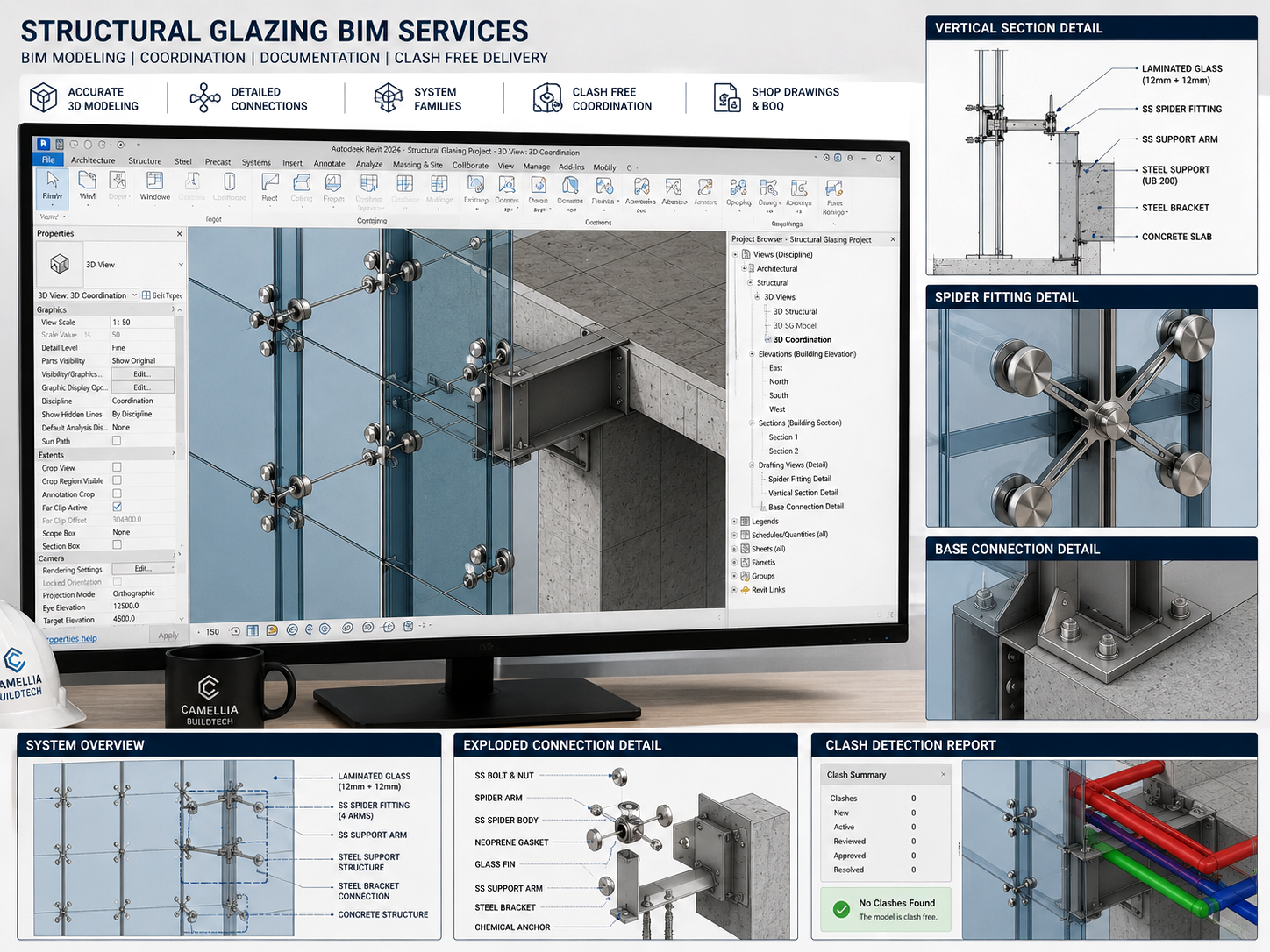
Frameless facades demand tight tolerances, precise coordination, and detailed shop validation.
Frameless Systems Demand Precise Coordination
Structural glazing systems are among the most visually striking and technically demanding building envelope solutions. Unlike conventional curtain walls with visible mullions, structural glazing creates expansive, flush glass surfaces using discreet stainless steel fittings. Tolerances are extremely tight. Interfaces with structural framing and building services are critical. BIM gives you early warning of constructability challenges before they impact site timelines. Glazing systems must accommodate differential movement during dynamic events like seismic forces.
Pilkington Planar & Industry Systems
Pilkington Planar uses stainless steel fittings housed in countersunk holes to fix glass to its structure, making it more discreet while maximizing visibility. The system has been installed worldwide, from London Crossrail stations to McDonald's Times Square restaurant in New York, and includes a 70m-tall sloped glass facade. The technology provides users with relevant data to support procurement, fabrication, cost estimates, and installation. Models can also be referenced by facility managers for repairs and maintenance in future.
Fabrication-Ready Outputs
Our models support the extraction of detailed shop drawings and fabrication details, including structural glazing elevations and panel layouts, stainless steel fitting and bracket connection details, glass panel schedules with dimensions and specifications, structural silicone joint details, and quantity take-offs for fittings, panels, and sealants.
Structural Glazing Levels of Development (LOD)
We deliver models aligned to international LOD standards to suit your structural detailing needs:
| LOD Stage | Title | Modeling Component Scope | Tolerance | Key Deliverables |
|---|---|---|---|---|
| LOD 200 | Conceptual Massing | Zoning of the structural glass envelope with approximate pane layouts and grid alignments. | +/- 50 mm | Envelope layout drafts & concept packs |
| LOD 300 | Detailed System Model | Accurate modeling of glass pane divisions, glass fins, and locations of point-fixed spider assemblies. | +/- 10 mm | Architectural coordination packs |
| LOD 350 | Coordinated Connectors | Modeling of spider fittings, bolts, structural cable-nets, anchor brackets, structural connections, and column interfaces. | +/- 3 mm | Navisworks clash detection & coordination |
| LOD 400 | Fabrication Detailing | Countersunk holes, detailed washer shapes, specific gasket profiles, weather sealants, and fabrication-ready shop layouts. | +/- 0.5 mm | Shop drawings & CNC fabrication plans |
Our Structural Glazing BIM Services
We provide comprehensive 3D modeling, coordination, and detailing services for frameless and point-supported envelopes:
Point-Supported Glazing BIM Modeling
We create intelligent 3D models for point-supported glazing systems, defining every structural component accurately.
- Bolted glazing systems
- Tensioned glazing systems
- Glass fin structures
- Point-fixed fittings and brackets
Structurally Bonded Glazing BIM Modeling
We develop precise models for structurally bonded glazing systems to guarantee weather sealing and structural stability.
- Silicone bonded glazing
- Frameless glass assemblies
- Structural glass walls and atriums
- Sloped and overhead glazing
Cable-Net & Tensioned Glazing BIM Modeling
We model cable-net and tensioned glazing systems with accurate tensioning details and support anchors.
- Cable-net glass walls
- Tensioned glass systems
- Steel cable support structures
- Tension fittings and connections
Shop Drawing Production
We extract detailed 2D shop drawings and fabrication details directly from the BIM model.
- Structural glazing elevations
- Panel layout drawings with numbering
- Stainless steel fitting and bracket details
- Structural silicone joint details
- Installation sequencing guides
Clash Detection & Coordination
We run clash detection between structural glazing models and structural framing, MEP systems, and interior finishes to resolve conflicts before fabrication.
- Navisworks clash detection
- Embed and support clearance checks
- MEP penetration coordination
- RFI reduction and coordination reports
BOQ & Material Takeoff
We generate accurate quantity takeoffs and material schedules directly from the model, supporting procurement planning and cost estimation.
- Glass panel quantity and size schedules
- Spider fittings and bolt schedules
- Sealant and silicone volume estimates
- Cost estimation support
Our Structural Glazing BIM Workflow
We systematically integrate design inputs, coordinate trades, and generate shop details:
Setup & Integration
We import architectural drawings, structural models, and facade design sketches into Revit, setting shared coordinates, levels, and grids.
Parametric Modeling
We create intelligent structural glazing elements using Revit's native tools and custom parametric families, applying specifications.
Trade Coordination
We ensure proper integration between structural glazing elements and structural framing, MEP systems, and interior finishes, running Navisworks clash checks.
Shop Drawing Production
We extract detailed 2D shop drawings from the model, including structural glazing elevations, panel layout drawings, and installation guides.
Quality Control
Each stage of delivery is reviewed by our team to ensure compliance with design, performance, and regulatory requirements.
Compatible Output Formats
Every structural glazing model and detail sheet is exported in industry-standard AEC formats:
Quality & Standards
Click checkboxes to verify compliance standards and sign off the quality checklist:
QUALITY VERIFICATION REPORT: STRUCTURAL GLAZING DETAILED MODELING
STATUS: ISO 9001 & UK BIM LEVEL 2 COMPLIANTFittings & Connection Clearance
Verify all point-supported spider fittings, bolts, and glass hole clearances are modeled within fabrication tolerances.
Support Structure Interface
Validate that structural glass fins, tension rods, and cable-nets align accurately with structural framing and slab edges.
Silicone Joint Specifications
Check that silicone bonded joints, gaskets, and sealants match depth and width parameters required for wind load performance.
UK & ISO 19650 BIM Standards
Audit model file naming, properties, shared coordinates, and layer structures to meet project information standards.
Material & Thermal Properties
Audit glass panels for thermal values, SHGC, thickness, and manufacturer metadata (e.g. Pilkington Planar settings).
Why Choose Our Structural Glazing BIM Services?
We provide deep technical envelope knowledge, constructability verification, and compliant BIM processes.
Specialized Expertise
Structural glazing design requires a distinctive appearance, technical functionality, and significant investment in installation planning. Our team has deep technical expertise in delivering structural glazing BIM across the full project lifecycle.
End-to-End Capability
We offer comprehensive support from early design development through to fabrication and installation. We work alongside architects, facade designers, and contractors to verify design and enhance constructability.
Digital Engineering for Smarter Decisions
We use advanced digital engineering practices to connect workflows and integrate global supply chains, delivering precise, efficient, and transparent outcomes at every stage. BIM modeling helps in efficient structural analysis and reduces project delivery time.
Quality & Standards
All our work complies with international BIM standards and applicable local building codes. Each stage is verified to ensure compliance with design, performance, and regulatory requirements.
Industries We Serve
We provide tailored drafting and modeling solutions across diverse construction sectors.

Commercial Real
Estate
High-precision models and coordination for corporate towers and office complexes.

Healthcare
Facilities
Specialized layout plans meeting stringent medical coding and airflow regulations.

Residential
High-Rises
Smart 3D drafting and structural layouts optimized for modern urban living.

Industrial
Plants
Complex piping, equipment layout modeling, and steel structure detailing.

Educational
Institutions
Scalable BIM models for universities, schools, and state-of-the-art campus facilities.

Infrastructure
& Bridges
Heavy civil structural drawings, reinforcement models, and highway layouts.

Hospitality
& Hotels
Interior rendering and shop drawings for premium hotels, resorts, and suites.
Retail
Complexes
Storefront detailing, cladding mockups, and MEP plans for multi-brand retail outlets.
Frequently Asked Questions
Find answers to common questions about our structural glazing BIM services below.
Structural Glazing BIM Modeling involves the creation of detailed, parametric 3D models for point-supported, bolted, and structurally bonded glazing systems using Autodesk Revit. We model every critical component—glass panels, stainless steel fittings, support brackets, and structural connections—within a single digital environment.
We model point-supported glazing systems (bolted and tensioned), structurally bonded glazing systems (silicone bonded), glass fin structures, cable-net and tensioned glazing systems, and sloped and overhead glazing.
We use Autodesk Revit as our primary modeling platform, with Navisworks and Solibri Model Checker for clash detection and coordination. We deliver in DWG, IFC, NWC, and PDF formats.
Yes. We extract detailed shop drawings and fabrication details directly from the BIM model.
We ensure proper integration between structural glazing elements and structural framing, MEP systems, and interior finishes. We run clash detection using Navisworks and resolve conflicts before fabrication.
Yes. We specialize in parametric structural glazing modeling that handles complex shapes, curved glass assemblies, and non-linear surfaces.
Explore Complementary Services
Coordinate your broader structural and architectural representations with our services: