BIM Coordination & Clash Detection Services Federated Model Coordination for Construction
Stop costly rework before it starts. Our BIM coordination and clash detection services help general contractors, subcontractors, and developers deliver projects on time and on budget.
What We Do
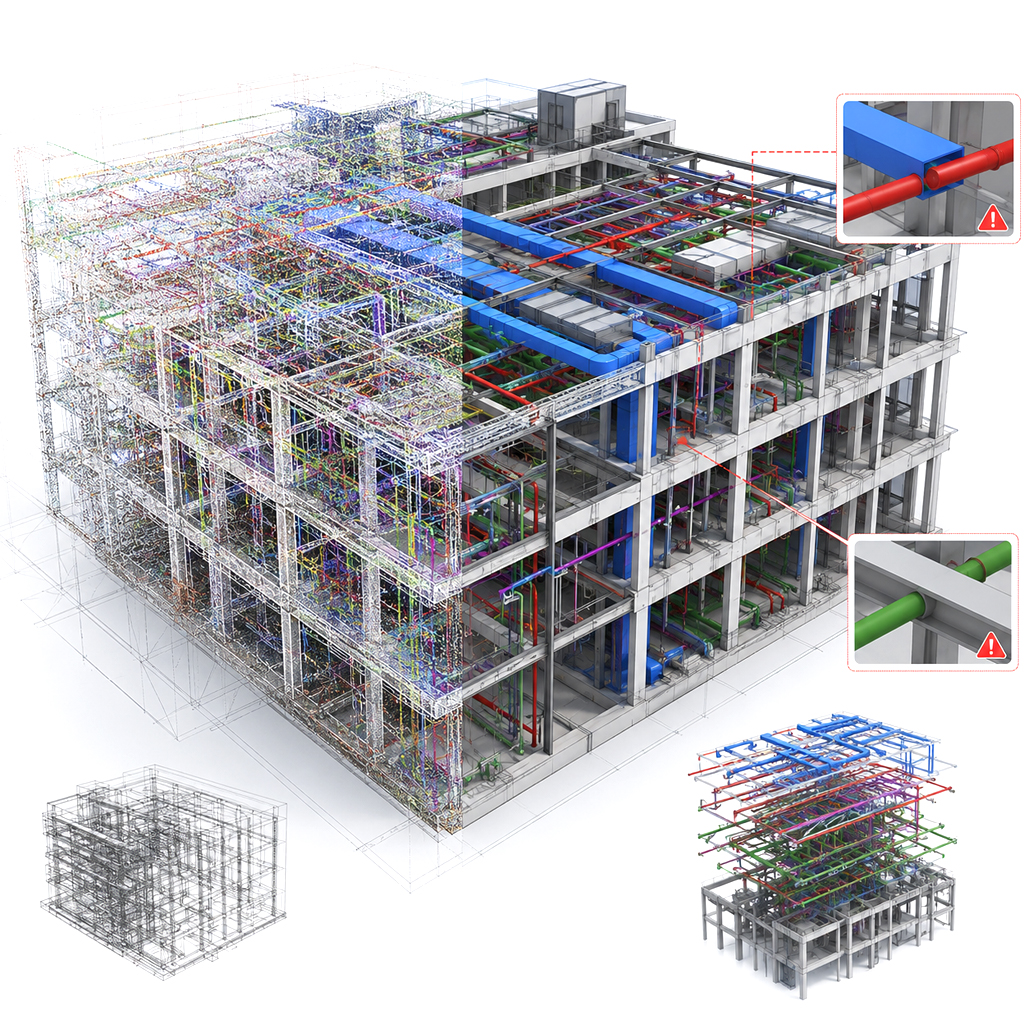
If you have ever been on a construction site when a duct hits a beam, or when plumbing routes clash with structural steel, you know exactly why BIM coordination matters. These are not just minor inconveniences. They are expensive, time-consuming problems that can throw entire schedules off track.
BIM coordination and clash detection is our way of catching these problems before they ever reach the site. We take the models from your architectural, structural, and MEP teams, bring them together in Navisworks, and systematically identify every interference. Then we work with your design team to resolve them — before construction begins.
This is not about finding faults. It is about giving your project team the confidence that what is on paper will actually work when it is built.
Why Bother with Coordination?
Here is the reality. Construction projects are getting more complex. Tighter programmes. More subcontractors. Less margin for error. And yet, many teams still try to coordinate using 2D drawings and hope that things will work out on site.
They rarely do. We have seen projects where clashes discovered during construction added weeks to the programme and hundreds of thousands to the budget. We have also seen projects where thorough coordination meant the site team could install services first time, every time, with no surprises.
When we coordinate your models properly, you get:
- Fewer change orders: Because the design already works.
- Less rework: Because nothing is installed twice.
- Clearer subcontractor packages: Because everyone knows exactly where their work fits.
- A programme you can actually stick to: Because the unknowns have been eliminated.
How We Work
Every coordination project we take on follows a consistent approach. It is structured, thorough, and designed to get results without unnecessary delays.
We Get Your Models
We start by collecting models from all project disciplines. Architectural. Structural. MEP. Any specialist subcontractor models that are relevant. We check each one for file integrity, coordinate system alignment, and basic quality before we do anything else. If something does not look right, we flag it immediately. There is no point running clash detection on models that are not properly aligned.
We Bring Everything Together
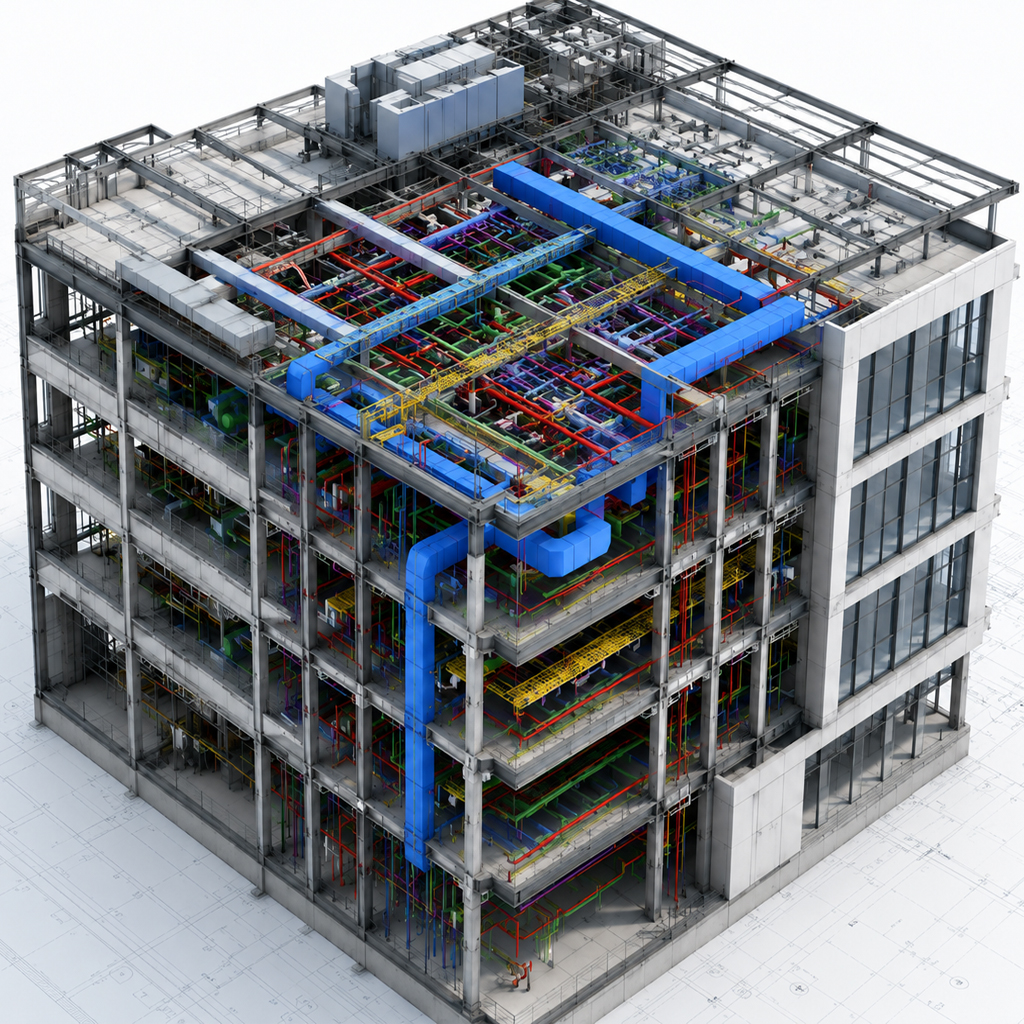
Once we are confident in the models, we federate them into a single Navisworks environment. This means all the disciplines exist in the same digital space, on the same coordinates. This is where the magic happens. We set up the model with clear visibility settings so your team can easily navigate between disciplines and zones. No one should have to hunt through a messy model to find what they need.
We Find the Clashes
This is where Navisworks does its thing. We run automated clash detection to find every interference between elements. We look for two types of clashes: Hard clashes & Soft clashes; We configure the clash rules carefully to catch real problems without drowning you in false positives.
We Prioritise and Plan
Not all clashes are equal. Some are critical and need immediate resolution. Others are minor and can be addressed in the normal design process. We categorise every clash we find: • Critical: These will stop construction or cause significant programme delay. We flag these immediately. • Major: These require coordination between disciplines but can be resolved through design changes. • Minor: These are low-impact issues that can be resolved through normal coordination. We provide a clear clash report that tells you exactly what needs attention and what can wait.
We Resolve and Coordinate
This is where the real work happens. We work with your design team to resolve every clash through coordinated design changes. We document every clash from identification through to resolution. Nothing gets closed without confirmation that the issue is genuinely resolved. We hold regular coordination meetings to review progress and keep everyone aligned.
We Deliver
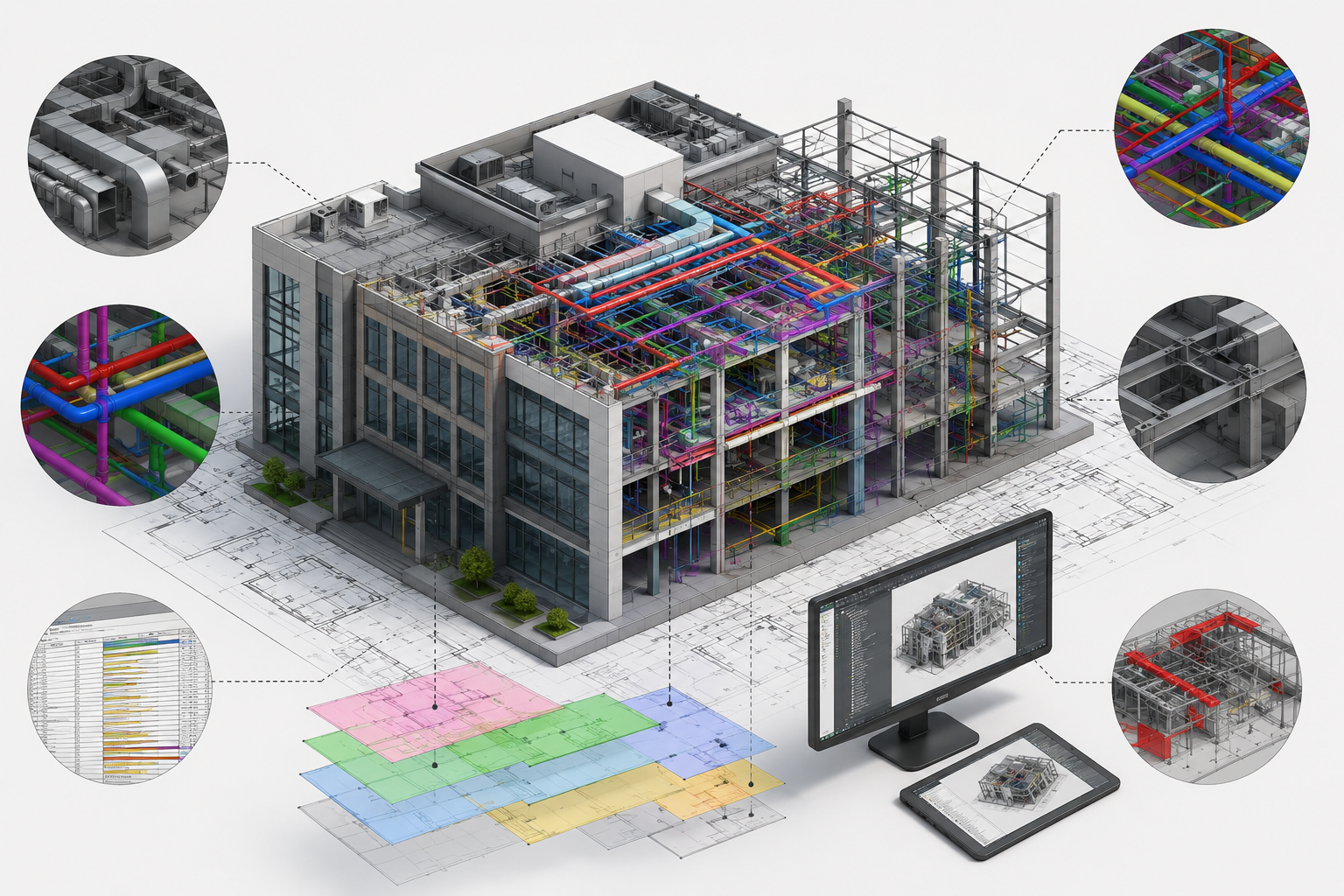
When we are done, you get everything you need to move forward with confidence: • Federated Navisworks model: The complete coordination environment. • Clash detection report: A clear log of every clash, its status, and resolution. • Resolution tracking: Full documentation of how each clash was resolved. • Coordination drawings: Clear, annotated drawings for on-site use. • Updated models: Resolved models ready for construction.
What We Coordinate
Our coordination services cover all the disciplines that typically clash on construction projects.
MEP Coordination
This is where most coordination problems occur. MEP systems are dense, complex, and often installed in tight spaces. We coordinate: • HVAC: Ductwork routing, space allocation, and clearance. • Plumbing: Pipe routing, valve access, and drainage. • Electrical: Cable trays, conduits, and switchgear.
Structural Coordination
Structural elements often constrain everything else. We coordinate: • Framing: Columns, beams, and connections. • Penetrations: Openings and sleeves for services. • Composite construction: Steel and concrete coordination.
Architectural Coordination
Architectural elements need to work with everything else. We coordinate: • Ceiling heights: Clearance for MEP systems. • Wall openings: Locations for doors and services. • Finishes and fixtures: Coordination with structural and MEP.
Industries We Serve
We provide tailored drafting and modeling solutions across diverse construction sectors.
Commercial Real
Estate
High-precision models and coordination for corporate towers and office complexes.

Healthcare
Facilities
Specialized layout plans meeting stringent medical coding and airflow regulations.

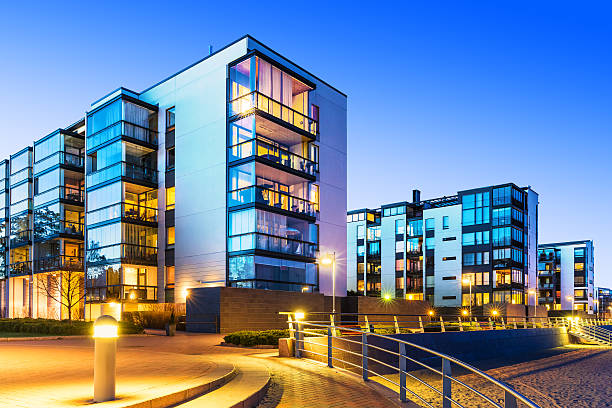
Residential
High-Rises
Smart 3D drafting and structural layouts optimized for modern urban living.

Industrial
Plants
Complex piping, equipment layout modeling, and steel structure detailing.

Educational
Institutions
Scalable BIM models for universities, schools, and state-of-the-art campus facilities.
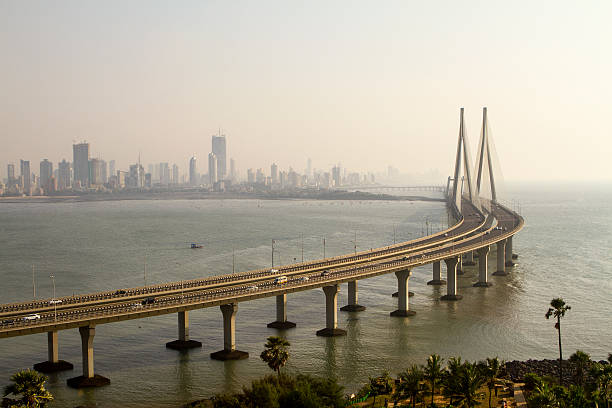
Infrastructure
& Bridges
Heavy civil structural drawings, reinforcement models, and highway layouts.
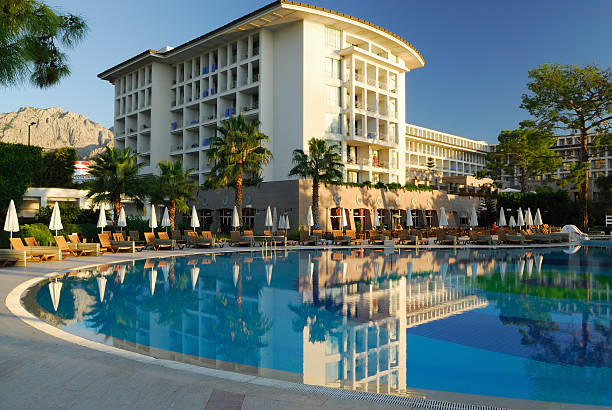
Hospitality
& Hotels
Interior rendering and shop drawings for premium hotels, resorts, and suites.
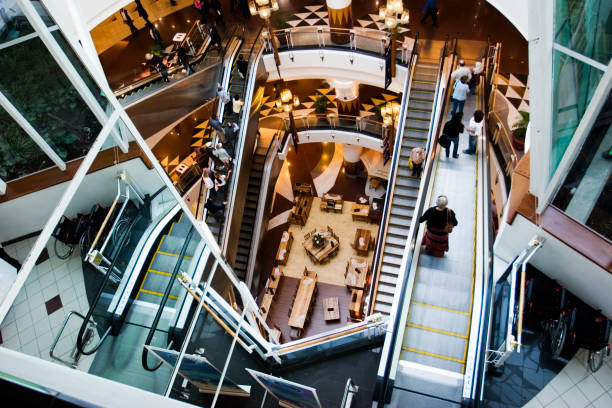
Retail
Complexes
Storefront detailing, cladding mockups, and MEP plans for multi-brand retail outlets.
The Tools We Use
We work with industry-standard software to deliver coordination services that integrate seamlessly with your project workflow.
| Software | What We Use It For |
|---|---|
| Autodesk Navisworks Manage | Clash detection and coordination |
| Autodesk Revit | Model development and revision |
| Autodesk BIM 360 / ACC | Cloud coordination and collaboration |
| Solibri | Quality assurance and checking |
| Synchro | 4D sequencing and phasing |
Why Work with Us
There are plenty of firms offering BIM coordination. Here is why construction teams come back to us project after project.
We understand construction
This is not just an academic exercise for us. We know how sites work. We understand the pressures your team faces. We coordinate with that in mind.
We are Navisworks specialists
Our entire team works in the coordination environment. We do not assign generalists to coordination projects. Everyone on our team has relevant certification and experience.
We document everything
Every clash, every resolution, every decision. You get a complete record of what we did and why. This is not just useful for the current project — it is valuable for future reference too.
We are responsive
We know construction schedules do not wait. We move quickly, communicate clearly, and keep your project on track.
We are thorough
We do not just find clashes. We help resolve them. We stay with the process from identification through to closure.
Examples of Our Work
12-Storey Commercial Tower — London
This was a complex project with tight coordination requirements. MEP services were dense. Structural constraints were significant. The client needed coordination completed before they could issue subcontractor packages.
We federated models from architectural, structural, and MEP teams. Identified 147 hard clashes. Worked with the design team to resolve every one before construction started.
Outcome: Six weeks saved on the programme. Rework reduced by 85%. The client issued subcontractor packages with complete confidence.
Hospital Expansion — England
Healthcare projects have unique coordination requirements. Infection control routes. Medical equipment access. Regulatory compliance.
We coordinated MEP services for a 200-bed hospital expansion. Identified and resolved every clash before construction.
Outcome: All services installed first time. Infection control routes maintained. Construction completed on schedule.
Data Centre — USA
Data centres are dense, complex, and unforgiving. No room for error. No tolerance for rework.
We coordinated structural and MEP services for a 50,000 sq. ft. data centre. Identified 93 clashes. Resolved every one before construction.
Outcome: Four weeks saved on the programme. No rework on site.
Quality Assurance
Good coordination requires rigorous quality assurance. Miss one clash and you could be dealing with a costly on-site problem.
Our QA process is designed to catch issues before they become problems.
Our QA checklist for coordination projects:
- Model validation: Every model is checked for file format, coordinate system alignment, and basic quality before we start.
- Clash rule review: We configure clash rules carefully to catch real problems without generating false positives.
- Resolution tracking: Every clash is logged, prioritised, and tracked through to resolution. Nothing is closed without confirmation.
- Client review: We hold regular coordination reviews with your team. You see the clashes. You approve the resolutions. You stay in control.
ISO 9001 Alignment
Our QA process follows ISO 9001 quality management principles. We maintain project records for audit and review.
Frequently Asked Questions
It is the process of bringing together models from different disciplines — architectural, structural, MEP — to identify and resolve interferences before construction begins. We use Navisworks to detect clashes and work with your team to resolve them.
Hard clashes are physical interferences. A duct running through a beam. Piping crossing steel. Things that cannot coexist. Soft clashes are clearance or access issues. A valve that cannot be reached for maintenance. Insufficient space for installation.
Navisworks Manage is our primary coordination tool. We also use Revit, BIM 360, Solibri, and Synchro depending on project requirements.
It is a combined model that brings together discipline-specific models in a single environment. The models remain separate but are aligned on common coordinates, allowing clash detection and coordination.
It depends on project size, complexity, number of disciplines, and coordination requirements. We provide fixed-price quotes within 24 hours of receiving your project brief.
Timelines vary based on model complexity and clash resolution requirements. Small projects typically take 2-4 weeks. Large or complex projects may take 4-8 weeks. We provide a project-specific schedule with every quote.
Federated Navisworks model, clash detection report, resolution tracking, coordination drawings, and updated models. Everything you need for construction.
Yes. We can integrate 4D phasing and logistics planning with your coordination work.
Let's Get Started
BIM coordination is not complicated. But it does require expertise, attention to detail, and a commitment to getting it right. That is what we bring to every project.
Contact us today. We will review your project, provide a clear scope and fixed-price quote, and get started when you are ready.